TB-500 research really means research on thymosin beta-4, the natural protein the synthetic peptide is based on. That literature stretches back decades and covers wound healing, the eye and the heart. This page summarises it in plain language, with links to the source papers on PubMed. We supply TB-500 for laboratory research only, so nothing here is a claim about effects in humans.
Comparing repair peptides? See our side-by-side BPC-157 vs TB-500 comparison, covering origin, sequence, research models and the strength of the evidence.
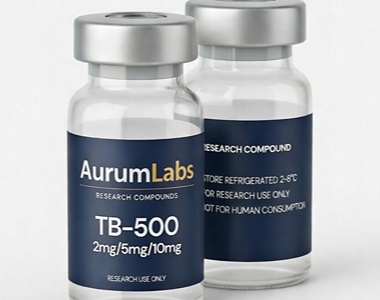
What is TB-500?
TB-500 is a synthetic peptide based on thymosin beta-4, a 43-amino-acid protein found in most human and animal cells. Thymosin beta-4 is best known as an actin-binding protein: it sequesters G-actin and thereby influences how cells move and rebuild their internal skeleton. Because cell migration sits at the heart of tissue repair, most of the research interest follows from that mechanism.
TB-500 research: what the thymosin beta-4 literature shows
The published TB-500 research base is really a thymosin beta-4 literature, and it splits into three strands. Below, we take each in turn. As always, the reference list links to every paper on PubMed, so you can read the original abstracts yourself.
Wound healing models
A 1999 study in the Journal of Investigative Dermatology tested thymosin beta-4 in a rat full-thickness wound model. The authors reported faster re-epithelialisation in treated animals compared with saline controls. Similarly, studies from 2001 and 2002 examined corneal wound healing in vivo and reported reduced inflammation. Later work has extended these models to other tissues.
Cardiac studies
The best-known paper is a 2004 study in Nature. It reported that thymosin beta-4 promoted cardiac cell migration and survival in mouse models of heart injury. However, the cardiac story is genuinely contested, as the next section explains. Most recently, a 2025 paper in Cardiovascular Research examined recombinant thymosin beta-4 in mice and in patients after heart attack, reflecting continued clinical interest.
Contradictory findings
Not every study agrees, and honest TB-500 research summaries should say so. For example, a 2012 paper in Circulation Research reported that thymosin beta-4 was dispensable for mouse cardiac development. Likewise, a 2012 study in the Journal of Molecular and Cellular Cardiology found no myocardial regeneration from treatment after heart attack in its model. In short, the cardiac claims are far from settled.
Limits of the current evidence
Almost all of this work is preclinical, and the animal findings are mixed. Moreover, TB-500 itself, as a synthetic product, has little direct published literature; researchers extrapolate from thymosin beta-4 studies. Consequently, strong claims about effects in humans are not supported. Careful researchers treat TB-500 as an investigational compound with an interesting but unresolved evidence base.
Research use only
AurumLabs supplies TB-500 strictly for laboratory research. It is not for human or animal use, and it is not a medicine or supplement. If your work calls for it, our TB-500 vials ship with a batch-specific Certificate of Analysis. You can also browse the wider Recovery and Repair range, or explore more summaries in our research library.
References
- Malinda KM et al. Thymosin beta4 accelerates wound healing. J Invest Dermatol, 1999. PMID: 10469335
- Sosne G et al. Thymosin beta 4 promotes corneal wound healing and modulates inflammatory mediators in vivo. Exp Eye Res, 2001. PMID: 11311052
- Sosne G et al. Thymosin beta 4 promotes corneal wound healing and decreases inflammation in vivo following alkali injury. Exp Eye Res, 2002. PMID: 11950239
- Bock-Marquette I et al. Thymosin beta4 activates integrin-linked kinase and promotes cardiac cell migration, survival and cardiac repair. Nature, 2004. PMID: 15565145
- Banerjee I et al. Thymosin beta 4 is dispensable for murine cardiac development and function. Circ Res, 2012. PMID: 22158707
- No muscle for a damaged heart: thymosin beta 4 treatment after myocardial infarction does not induce myocardial regeneration. J Mol Cell Cardiol, 2012. PMID: 22019445
- Recombinant human thymosin beta 4 improves ischemic cardiac dysfunction in mice and patients with acute STEMI. Cardiovasc Res, 2025. PMID: 41229390
