NAD+ research sits at the centre of modern ageing biology. The molecule appears in thousands of papers, from enzyme chemistry to whole-organism studies. This page gives a plain-language overview of the field, with links to major reviews and primary studies on PubMed. We supply NAD+ as a research compound for laboratory use only, so nothing here is a claim about effects in humans.
What is NAD+?
Nicotinamide adenine dinucleotide, or NAD+, is a coenzyme found in every living cell. It shuttles electrons in the reactions that turn food into energy. Beyond that classic role, it also serves as a substrate for signalling enzymes. These include the sirtuins, the DNA-repair enzymes known as PARPs, and the NAD-consuming enzyme CD38. A 2021 review in Nature Reviews Molecular Cell Biology sets out these roles in detail. Likewise, a 2021 Cell Metabolism review traces how ideas about NAD+ metabolism have evolved.
NAD+ research: the main themes
Three themes dominate current NAD+ research: why levels decline with age, what that decline does, and whether restoring levels changes anything. Below, we take each theme in turn. The reference list at the end links to every paper mentioned.
Why NAD+ declines with age
Tissue NAD+ levels tend to fall during ageing. Two well-cited studies point to the enzyme CD38 as a driver. First, a 2016 Cell Metabolism paper showed that CD38 expression rises with age in mice, and that CD38 is required for the age-related NAD decline in that model. Then, a 2020 study in Nature Metabolism linked the decline to inflammatory macrophages that express high levels of CD38. Together, these papers shifted the field’s focus toward NAD-consuming enzymes.
What the decline is linked to
Falling NAD+ has been associated with several hallmarks of ageing in preclinical work. For example, a 2020 review in Signal Transduction and Targeted Therapy surveys its links to metabolism, DNA repair and inflammation. Similarly, a 2021 review in Circulation examines NAD+ metabolism in cardiac ageing models. More recently, a 2024 Aging Cell review connects NAD metabolism to cellular senescence. However, association is not causation, and much of this evidence comes from animal models.
Can levels be restored, and does it matter?
Precursor molecules can raise NAD+ levels, and that fact has driven intense interest. Yet the outcome question remains open. A 2024 review in Nature Reviews Molecular Cell Biology puts it plainly: NAD+ levels can be replenished through supplementation, but much about the benefits in humans is still unproven. Therefore, careful researchers separate two claims. Raising NAD+ levels is well documented; improving human health outcomes by doing so is not yet established.
Limits of the current evidence
NAD+ research is a large field, but it is young where it matters most. Most mechanistic work uses cells and rodents. Human trials of NAD+ precursors exist, although they are mostly small and short. Consequently, the strong public claims that circulate around NAD+ often run ahead of the data. The reviews cited here are a good antidote, because they state both the promise and the gaps.
Research use only
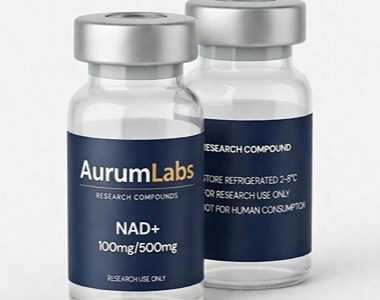
AurumLabs supplies NAD+ strictly for laboratory research. It is not for human or animal use, and it is not a medicine or supplement. If your work calls for it, our NAD+ vials ship with a batch-specific Certificate of Analysis. You can also browse the wider Longevity and Bioregulators range, or explore more summaries in our research library.
References
- Covarrubias AJ et al. NAD+ metabolism and its roles in cellular processes during ageing. Nat Rev Mol Cell Biol, 2021. PMID: 33353981
- Chini CCS et al. Evolving concepts in NAD+ metabolism. Cell Metab, 2021. PMID: 33930322
- Camacho-Pereira J et al. CD38 dictates age-related NAD decline and mitochondrial dysfunction. Cell Metab, 2016. PMID: 27304511
- Covarrubias AJ et al. Senescent cells promote tissue NAD+ decline during ageing via CD38+ macrophages. Nat Metab, 2020. PMID: 33199924
- Xie N et al. NAD+ metabolism: pathophysiologic mechanisms and therapeutic potential. Signal Transduct Target Ther, 2020. PMID: 33028824
- Abdellatif M et al. NAD+ metabolism in cardiac health, aging, and disease. Circulation, 2021. PMID: 34843394
- NAD metabolism: role in senescence regulation and aging. Aging Cell, 2024. PMID: 37424179
- Regulation of and challenges in targeting NAD+ metabolism. Nat Rev Mol Cell Biol, 2024. PMID: 39026037
